

What problem are you solving right now?
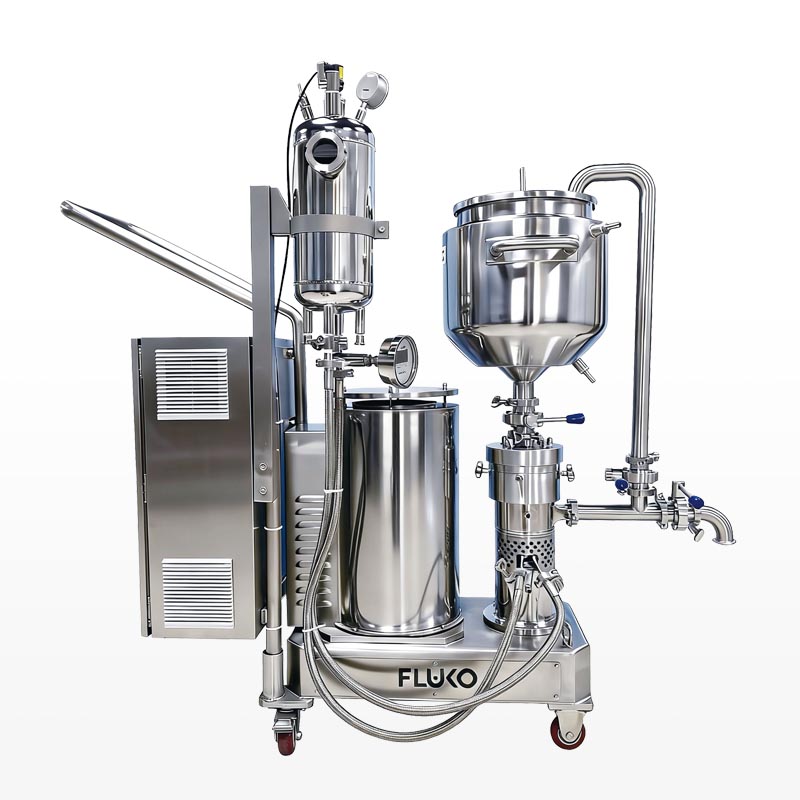
When emulsions droop, suspensions settle quickly, or scale-up yields unexpected particle growth, the immediate task is to identify whether the mixing system supplies the required shear field. Engineers often reach for a high shear lab mixer to recreate production conditions at bench scale and isolate the variable causing failure. Start by treating the symptom (coarse dispersion, phase separation) as a measurement problem: what shear rate and energy density did you actually deliver?
Root causes and measurable failure modes
Failures fall into a short list you can quantify. Low energy per unit volume (kW·h/m3) gives incomplete breakup. Excess tip clearance reduces local shear rate; excessive tip speed raises temperature and can cause re-coalescence. Impeller geometry affects flow regime — rotor–stator devices produce high local shear, while simple propellers rely on bulk flow. Measure particle size distribution (D10/50/90), viscosity, and temperature during processing. Compare these to expected ranges; deviation signals either inadequate power input, incorrect residence time, or chemical instability under shear.
Selection variables that actually matter
Specify performance, not brand. Key parameters: power per volume (W/L), tip speed (m/s), shear rate (s^-1) at working clearance, and achievable processing temperature. For emulsions, aim for power per volume in the range identified during development (often 2–10 kW/m3 at lab scale), then validate scale-up by matching tip speed or energy density depending on whether breakup is viscous- or inertial-dominated. Material compatibility (316L, Hastelloy), sanitary seals, CIP capability, and rotor–stator vs. rotor-only designs must align with your cleaning and contamination limits.
Common pitfalls and corrective actions
Don’t assume linear scale-up. Mistakes I see repeatedly: (1) scaling by RPM alone — instead calculate matching tip speed or energy per unit mass; (2) ignoring tip clearance — small changes shift shear markedly; (3) processing at uncontrolled temperature — thermal thinning changes droplet breakup; (4) choosing oversized equipment that runs at low load and fails to produce the turbulent field you need. Fixes are simple: recalibrate power curves, control temperature with jacketed tanks or quench loops, and document tip clearance and rotor geometry in your SOP.
Bench validation, alternatives, and a real-world anchor
For bench validation, sample at steady state and track PSD and viscosity. For formulation screening, a benchtop homogenizer is a practical comparator to rotor–stator mixers; many process engineers first evaluate performance differences at Pittcon (Pittsburgh Conference), where manufacturers and academics present side-by-side data. Use matched energy-per-volume runs to compare equipment classes, then choose the device that reproduces both PSD and stability metrics without thermal degradation.
Metrics, test protocols, and acceptance criteria
Define acceptance around measurable outputs: D50 target ± a tolerance, viscosity at shear rates relevant to filling, and recovery of active concentration after processing. Protocol: run three replicates at target energy density, measure PSD at t=0 and after 24–72 hours, and log temperature and power draw continuously. If results drift, correlate with wear items (rotor abrasion, seal degradation) and maintenance records.
Conclusion
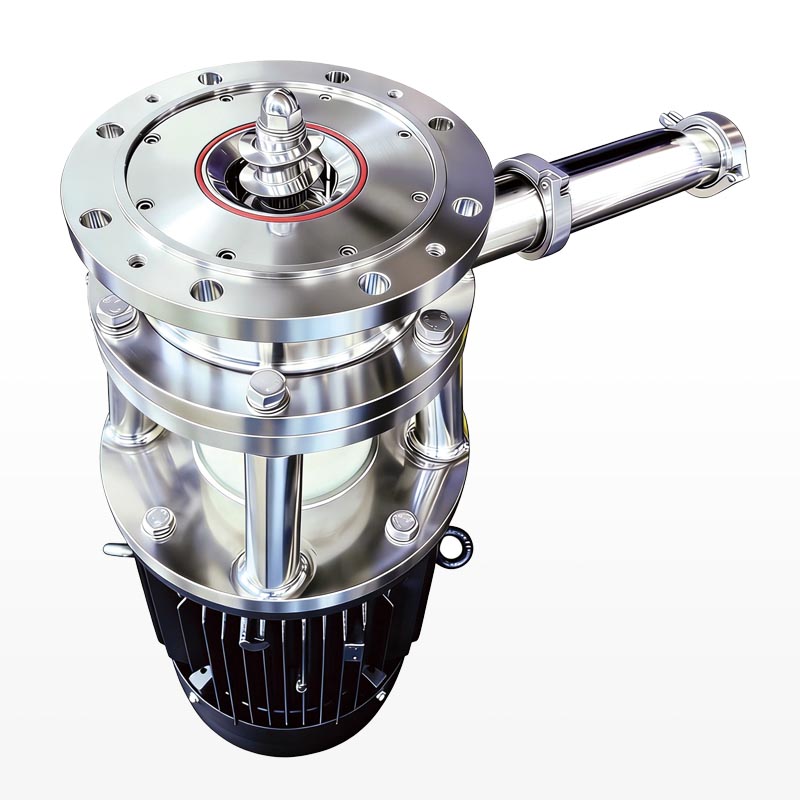
Treat high-shear mixer tank selection as a measurement and control problem: quantify the shear field, match energy density during scale-up, and validate with repeatable bench protocols. When a practical match between bench, pilot, and production is required, equipment that documents power curves, tip-speed performance, and sanitary construction simplifies validation — the pragmatic choice for many teams is to work with suppliers such as FLUKO that provide the data and configurations needed to align lab results with plant outcomes.
