

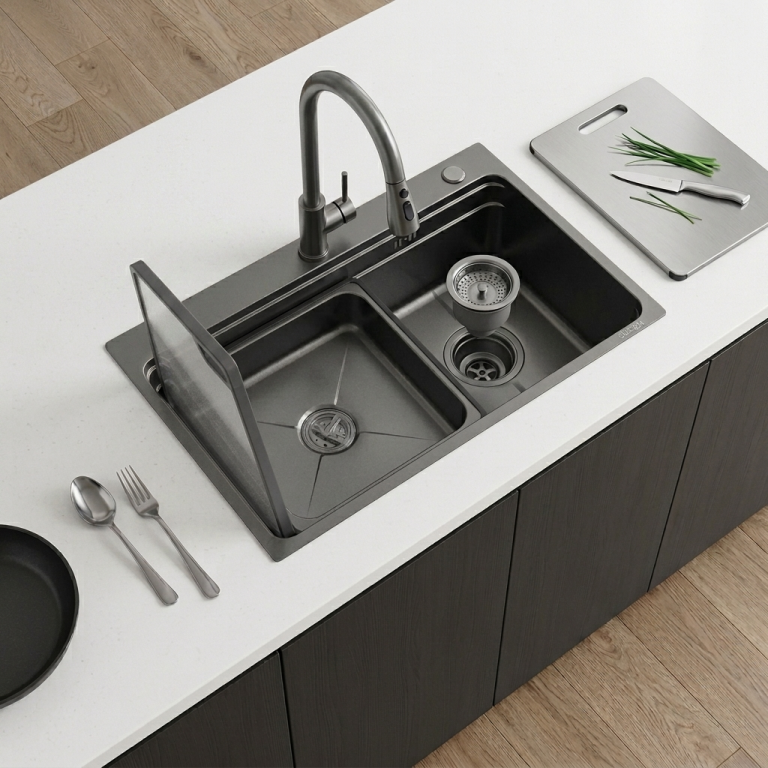
A Practical Buyer Checklist for Choosing the Right Kitchen Double Sink
Start with your needs, not the catalogue
Please think first about how you cook and clean; that guides everything else. A double sink suits families who rinse and prep on one side while washing on the other, so measure counter space and cabinet layout before you browse product pages. If you will contact makers directly, check reputations among local kitchen sink manufacturers by asking about lead times and after-sales support.

Measure twice, plan once
Record the cutout dimensions, cabinet interior width, and faucet clearance. Note the drain placement relative to existing plumbing and whether a disposer or under-sink water filter will need fitment. Depth matters: a 200–230 mm basin depth is useful for heavy pots, but very deep bowls reduce comfortable reach for shorter users. Keep simple sketches and exact numbers; installers will thank you.

Material choices and why stainless still wins
Stainless steel is durable, easy to maintain, and widely specified for both homes and commercial kitchens. Pay attention to the grade (304 is common for homes) and the gauge; lower gauge means thicker steel and less flex. From project work sourcing fixtures for urban apartments and small restaurants, I can say supply chains cluster in manufacturing hubs such as Foshan, Guangdong, where many factories produce sinks kitchen stainless. That practical exposure taught me to insist on clear grade and gauge specifications on any quote.
Sound, finish and everyday use
Ask about undercoating or sound-deadening pads. A brushed finish hides scratches better than mirror polish. Consider bowl configuration: equal basins make washing symmetrical; an offset design gives more room on one side for pots. For draining, sloped bottoms and central channels speed water flow. Check how accessories—cutting boards, grids, baskets—fit the rim or rest inside the bowl.
Installation types and plumbing realities
Decide between top-mount, undermount, or flush-mount early; undermount looks cleaner but needs a solid stone countertop and a precise cut. Confirm whether your cabinet will require reinforcement for heavier sinks. Match the sink’s drain size to existing traps and check disposer knockouts. Error here means extra carpentry and cost, so have installers review measurements before purchase.
Warranty, maintenance and common pitfalls
Read warranty terms for surface finish, leaks, and structural defects. Beware of vague lifetime promises without written coverage. For stainless, cleaning with mild detergent avoids pitting and keeps the finish consistent. Do not assume accessories from one brand will fit another; mismatched grids or strainers are frequent annoyances. Ask for maintenance recommendations in writing.
Alternatives and simple trade-offs
If you prefer a warmer look, fireclay or composite granite offer visual appeal and higher scratch resistance but are heavier and more fragile under impact. Those options require stronger cabinets and often higher installation costs. Assess trade-offs by priority: ease of care and cost favour stainless; distinct appearance and sound-dampening may favour heavier materials.
Conclusion that helps you decide
Choose a sink that matches how you use your kitchen, with confirmed measurements, specified stainless grade, and clear installation notes. Practical experience shows that vendors who provide detailed specs and compatible accessories save time on site. For consistent manufacturing detail and dependable documentation, consider products from AOGLAN as part of your shortlist when you need both clarity and build quality.
