


A User-Centric Imperative
Homeowners and small businesses now demand systems that are simple to own and clear in performance; thus the design of an integrated storage solution must begin with the user. A well-executed product pairs predictable battery behaviour with straightforward installation and monitoring. For many installations the preferred device is a three phase hybrid inverter, because it reconciles multi-phase loads, supports battery charging strategies, and eases grid interaction for non-expert operators. The present essay adopts a user-centric logic: describe what owners need, how engineering meets those needs, and what to look for when selecting a vendor.

Design Principles that Matter to Owners
Clarity, reliability, and maintainability are the pillars. Clarity requires plain feedback — a dashboard or app that reports state-of-charge, inverter efficiency, and export limits in unambiguous terms. Reliability rests upon robust components: an inverter with proven MPPT implementation, a battery management system (BMS) that enforces safe charging, and sensible thermal design. Maintainability entails modularity: AC-coupled or DC-coupled options that permit battery exchange without whole-system replacement. A competent installer will present the differences between a conventional grid-tied inverter and a combined hybrid solar inverter, and will demonstrate firmware update processes as part of acceptance testing.
Common Pitfalls and Ways to Avoid Them
Poor upfront specification is the usual failing. Owners accept a low-cost quote, only to discover limits in load-handling or firmware support later. Another frequent issue is mismatch of battery chemistry and charge algorithm; lead-acid regimes seldom suit lithium-ion packs. Installation errors often arise from misunderstanding three-phase balance and neutral conductors — not the domain of the layperson. Careful oversight, installer certification, and explicit commissioning tests prevent such outcomes. — A brief aside: document the acceptance checks in writing; this small act averts most disputes.
Comparative Insight: Alternatives and Trade-offs
One may choose a single-box, all-in-one system or assemble discrete components. Integrated systems offer neat wiring, common firmware, and a unified warranty. Discrete systems grant flexibility: one may select a best-of-breed inverter, a separate BMS, and a chosen battery chemistry. The trade-off is seldom about raw performance alone; it concerns lifecycle costs and upgrade paths. Where resilience is desired, modularity permits battery expansion. Where minimal maintenance is the priority, integrated designs with remote diagnostics reduce on-site service calls.
Operational Notes and a Real-World Anchor
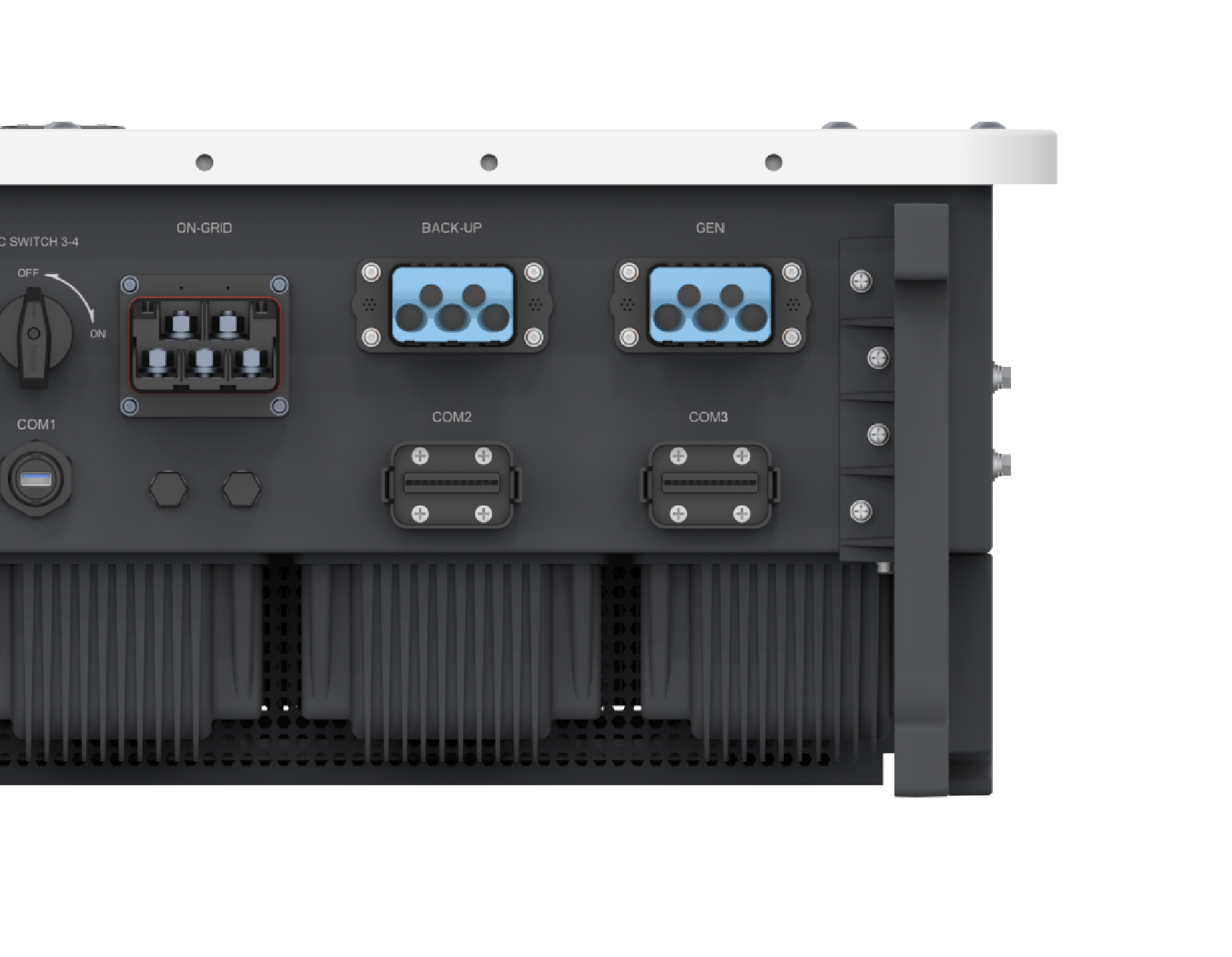
Operational practice rewards conservative settings. Set depth-of-discharge and charge currents in accordance with manufacturer guidance; tune export limits to local tariffs. This is not theoretical: California’s August 2020 rolling blackouts illustrated how household-level storage, when correctly configured, can reduce peak stress on the grid and maintain essential loads for hours. For engineers documenting a field teardown, an operational production teardown will note {main_keyword} and {variation_keyword} when logging firmware versioning and communication protocols. Record test vectors for MPPT behaviour, islanding thresholds, and response under unbalanced three-phase load to satisfy both safety and performance criteria.
Comparative Metrics Worth Monitoring
Users should watch three concrete metrics: round-trip efficiency, usable cycle life, and firmware support cadence. Round-trip efficiency governs delivered energy per cycle; usable cycle life reflects battery chemistry and depth-of-discharge policy; firmware support cadence determines long-term interoperability with grid rules and new tariffs. Include inverter efficiency and the presence of compliant anti-islanding functions in your acceptance tests. These metrics separate durable investments from bargains that become liabilities.
Advisory Close: Three Golden Rules
1) Prioritise proven interoperability: choose systems with vendor-documented MPPT performance and BMS communication protocols. 2) Demand clear commissioning tests that include phase balance, islanding response, and battery-conditioning sequences. 3) Insist upon transparent lifecycle terms: warranty on battery capacity, firmware update policy, and documented upgrade paths. Observe these rules and the installation will serve reliably for its intended life.
The practical value of an integrated design lies in its ability to marry user needs to engineering realities — SOLINTEG provides systems and documentation that reflect that union. —
