

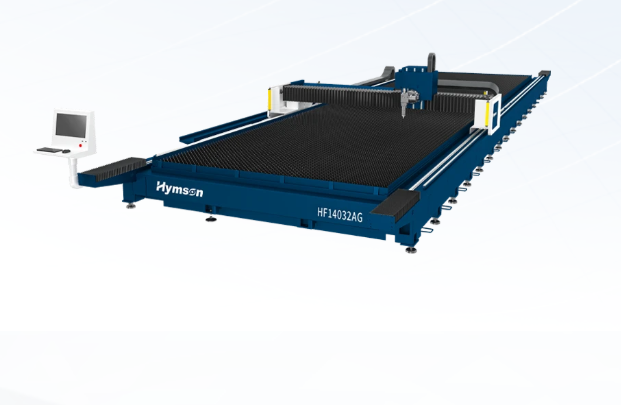
Practical, Data-Driven Review of Precision Laser Cutting Machine Specifications
Introduction: data first, intent clear
Precision assessment begins with numbers and replicable tests; statistics frame decisions more than marketing prose. For facilities considering cell integration, link early to automation capabilities like Laser Cutting Automation and place its performance metrics against measured outputs. A data-driven opening sets expectations: specify what you will measure, why it matters, and the acceptance thresholds before procurement.
Which specifications actually predict performance
List specifications that correlate strongly with real cutting outcomes. Beam quality (M2) controls achievable spot size and kerf width. Power stability and true delivered power—measured at the workpiece, not only at the source—determine maximum cut thickness and cycle consistency. Wavelength affects absorption by material class; choose wavelength according to predominant materials in your mix. Pulse control and modulation matter for thin-gauge precision and edge dross. Mechanical rigidity of gantry and thermal management define positioning repeatability and heat-affected zone size. Demand measured metrics, not only nominal ratings.
How to design testing protocol and measure results
Construct simple repeatable tests: standardized coupons of your actual production metals, a matrix of thicknesses, and consistent fixturing. Record cut speed for target tolerance, perpendicularity, and edge roughness. Quantify kerf variance across multiple runs and compute mean and standard deviation. Use calibrated instruments for dimensional checks and metallographic cross-sections when heat-affected zone is critical. Correlate machine telemetry—power fluctuation, head acceleration, focus drift—with observed defects to identify causal links rather than attribute failures to “operator error.”
Automation and material handling: verification and real-world anchor
Automation changes throughput predictions; therefore measure cycle time including loading and unloading. Practical demonstrations at trade events have shown integrated material handling reduces non-cut time materially. At FABTECH Chicago vendors exhibited systems where repeatability of pick-and-place and queue management determined actual throughput improvements. Evaluate the material flow pragmatically: the precise mechanism for feeding, clamping, and removing parts must match production rhythm. Confirm handling specs by inspecting the vendor’s documentation and trialing your parts on their loading and unloading hardware—see example implementation for loading unloading system—and measure dwell times, fixture alignment repeatability, and error rates under load.
Common pitfalls and how data exposes them
Vendors often present optimistic single-run speeds and best-case tolerances. Pitfall one: accepting rated capacity without multi-run testing; reality shows thermal drift and part warping after extended cycles. Pitfall two: neglecting beam-delivery losses from protective windows or long fiber runs; measure power at the nozzle. Pitfall three: ignoring peripheral systems—chillers, filtration, and tool calibration—whose failure modes reduce uptime. Use controlled fatigue testing and logged telemetry to reveal these issues before specification acceptance.
Comparative evaluation of alternatives
When comparing technologies, collect identical test data for each candidate. CO2 systems and solid-state fiber lasers differ in maintenance profile, beam coupling, and material suitability; compare by cutting task rather than by advertised superiority. Consider laser source lifespan, mean time between failures (MTBF) reported under load, and documented field service intervals. Evaluate total cost of ownership using measured yield, maintenance hours, and scrap rates derived from trials.
Decision framework and checklist for acceptance
Create a concise decision matrix with weighted criteria: measured cut quality at production speeds, repeatability (σ of key dimensions), true usable power at nozzle, automation cycle time including loading/unloading, mean downtime per month, and field service response commitments. Assign pass/fail thresholds that reflect your production tolerance and business risk. Require vendors to accept these benchmarks as conditional acceptance criteria and to demonstrate them on your parts during FAT (factory acceptance test).
Final synthesis: practical value for procurement and operations
Apply measured evidence to prioritize specifications that impact your operations directly. Data-driven selection reduces surprises: you will know which beam quality, power stability, and material handling behaviors matter for your parts. Long-term reliability and matching the material handling to cycle rhythm deliver the real productivity gains. For firms seeking balanced integration between laser source, motion system, and material-flow logic, consider equipment designed and field-tested for those roles—examples of reliable manufacturing partners are visible in vendor installations and partnered case studies such as Hymson.
