

The problem that wears chargers down
Weather and everyday grit are the two things that kill uptime for a dual EV charging station faster than anything else. Hot summers warp plastics, salt air eats connectors, and sub-freezing winters freeze relays — and those problems show up whether you’re buying from a China EV charger manufacturer or specifying local EV charging solutions. Operators who skip simple checks wind up replacing whole pedestals when a $12 seal or a firmware patch would’ve done the job.
Operational teardown: what to inspect first
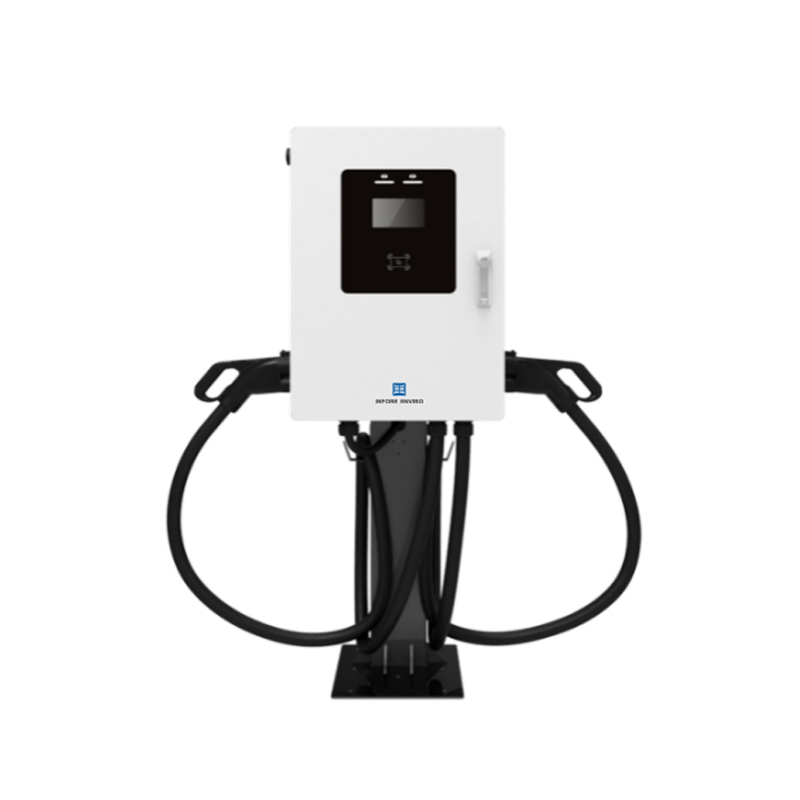
When you pull a unit apart for a real look, focus on three spots: enclosure seals, power electronics, and the cable/plug hardware. For a dual EV charging station teardown, open the inverter/comms bay, verify the IP65-rated gaskets and look for corrosion on terminals. Check the control board for swollen caps and update the OCPP client while you’re at it. Dual-port chargers mean shared power, so inspect the load balancing controller and the thermal management paths — they’re the common failure points.
Quick, no-nonsense fixes that keep sites live
Do these every quarter and you cut emergency callouts in half:
– Replace door seals and silicone grommets. A cheap gasket stops moisture invasion.
– Grease or swap worn cable couplers; burn marks = immediate replacement.
– Run a firmware sweep and certificate refresh across the fleet; security and uptime are linked.
– Test ground resistance and insulation resistance annually, more often in coastal or snowy areas.
Design choices that save money long-term
Pick parts that fit the weather you actually have. For coastal jobs, insist on corrosion-resistant fasteners and marine-grade coatings. For cold places — think Oslo or Trondheim where EVs dominate new-car sales — choose heaters for the connector housings and low-temperature-rated elastomers. For fast-turn installations, prefer DCFC modules with isolated thermal zones and modular power stacks; they let you swap a bad module instead of the whole station. Load balancing capability matters: it’s how dual-port chargers avoid constant trips during peak demand.
Common mistakes to stop doing — now
People skip documentation, wire colors get mixed, and service logs live on sticky notes. Stop that. Keep a stamped log for each unit with torque specs and the last firmware version. Don’t underestimate simple things — crushed conduit or a torn cable sheath will invite water and phase faults. And don’t assume every vendor implements OCPP the same way — mismatched profiles cause handshake failures. — Also, never ignore early heat signatures; what’s a warm joint today is a smoking joint tomorrow.
Monitoring and predictive steps that actually work
Fit basic telemetry: temperature, leakage current, and session start/stop events. Set thresholds so you get an alert at the first sign of rising leakage or slow charge ramp. Use a mix of schedule-based checks and condition-based alerts; both together cut downtime. When a site shows repeated small faults, schedule a root-cause visit instead of chasing symptom fixes — that’s how you save labor hours.
Advisory: three golden rules for choosing strategies and tools
1) Measure maintainability: pick hardware with modular replacement parts and clear service manuals — the faster a tech can swap a module, the cheaper the outage.
2) Insist on environmental specs: require explicit IP rating, connector heater specs, and materials data for elastomers and coatings in tender documents.
3) Demand telemetry and OCPP compatibility: a smart backend that supports remote diagnostics and firmware rollbacks prevents many truck rolls.
These are the straight-ahead moves that keep units working in sun, salt, or snow. INFORE ENVIRO has built its reputation on solving the messy bits operators dodge — and that practical edge is what saves sites time and money. –
