

Lead-in: why comparison matters for buyers
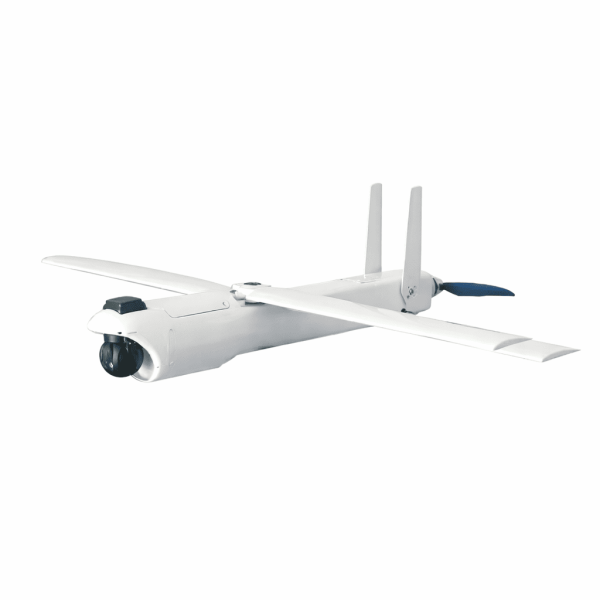
Buying tactical unmanned aerial systems requires more than picking a chassis and payload. Buyers—whether procurement officers, private security teams, or systems integrators—need clear comparisons of sensor performance, particularly micro‑Doppler detection and clutter suppression. This matters for real missions and for catalog shopping: see current options at military drones for sale. The choice you make affects target discrimination, false-alarm rates, and the scope of intelligence, surveillance, and reconnaissance (ISR) tasks you can credibly perform.
Key detection trade-offs: hardware versus signal processing
At the hardware level, radar aperture, carrier frequency and pulse design set baseline sensitivity and radar cross section (RCS) visibility. Higher-frequency radars often resolve fine micro‑Doppler motion better, yet they suffer more from atmospheric attenuation and complex clutter. Software approaches—advanced Doppler processing and adaptive clutter suppression—can compensate but require compute and time. A balanced system pairs modest, rugged radar with robust on-board processing to keep latency low for tactical use.
Micro‑Doppler signatures: what they reveal
Micro‑Doppler extracts characteristic motion from rotors, propellers and body oscillations, turning tiny mechanical patterns into identification cues. For small rotary-wing and multirotor platforms, micro‑Doppler helps separate friend from foe and classify payloads or rotor count. Practical systems fuse micro‑Doppler with electro-optical feeds or synthetic aperture radar (SAR) imaging to raise confidence. This sensor fusion reduces reliance on any single signature.
Clutter suppression techniques that work in the field
Clutter suppression ranges from simple moving-target indication (MTI) filters to sophisticated coherent change detection and machine-learning classifiers trained on labeled clutter. In urban or forested environments, adaptive filters that learn local background statistics outperform static thresholds. Processors that implement space-time adaptive processing (STAP) can remove terrain-locked clutter while preserving micro‑Doppler returns—yet they require calibration and careful tuning during deployment.
Practical comparisons: platforms and software stacks
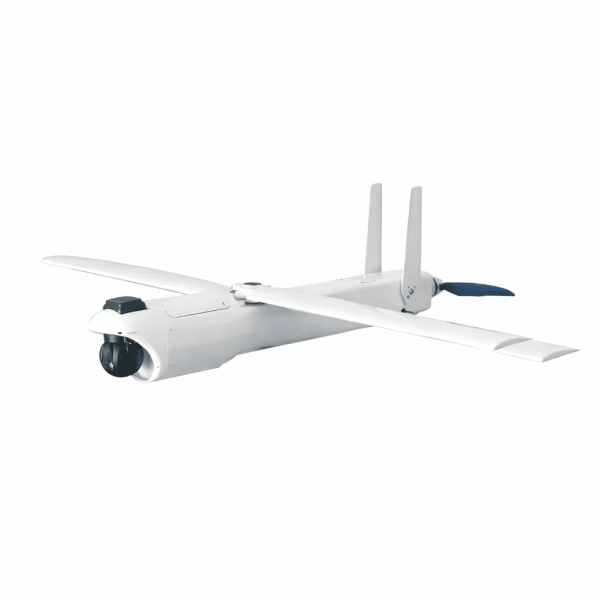
Compare three practical approaches when evaluating systems: lightweight ISR drones with modest radar and onboard ML; medium platforms with dedicated radar pods and edge GPUs; and larger tactical UAVs carrying enterprise-grade radar suites. Lightweight options offer endurance and low cost but limited detection range. Mid-tier systems hit a practical sweet spot for many ops. High-end suites provide superior clutter suppression and target fidelity but increase logistics and training burdens—so choose according to mission profile, not just headline specs.
Real-world anchor: lessons from recent conflicts
Open-source reports from the 2022 conflict in Ukraine highlighted recurrent use of small drones for reconnaissance and loitering munitions. Analysts noted that systems combining micro‑Doppler analysis with visual confirmation reduced misclassifications under complex urban clutter. Those field lessons underline a basic truth: a good signature algorithm without robust clutter suppression still struggles in dense environments—integrators must address both.
Common mistakes and better alternatives
Procurement often errs by prioritising peak range or raw resolution figures instead of end-to-end detection probability and false-alarm rates. Buyers also underestimate the role of operator workflows and user interfaces when integrating radar-derived cues into mission planning. Better alternatives include trial deployments in representative environments, insistence on real performance metrics, and choosing vendors who provide software updates and tuning tools—small upfront effort saves much time later.
Summary of comparative insights
Micro‑Doppler and clutter suppression together determine operational value. Systems that balance modest, rugged hardware with adaptive processing and sensor fusion deliver the most versatile outcomes for tactical operators. Costs and logistics matter, but so do actionable metrics and on-ground tuning—vendors who support those needs earn long-term trust.
Advisory: three golden rules for selection
1) Measure detection performance in the intended environment—insist on P_d and false-alarm statistics rather than specs alone. 2) Prioritise adaptable clutter suppression and field-tunable software; real environments change. 3) Validate sensor fusion workflows so micro‑Doppler cues integrate with EO/IR feeds and command displays. Follow these and you’ll pick systems that actually work on missions.

Military Hub helps match those operational metrics to products and services—making procurement pragmatic, not theoretical. —
