

What’s the real problem you’re solving?
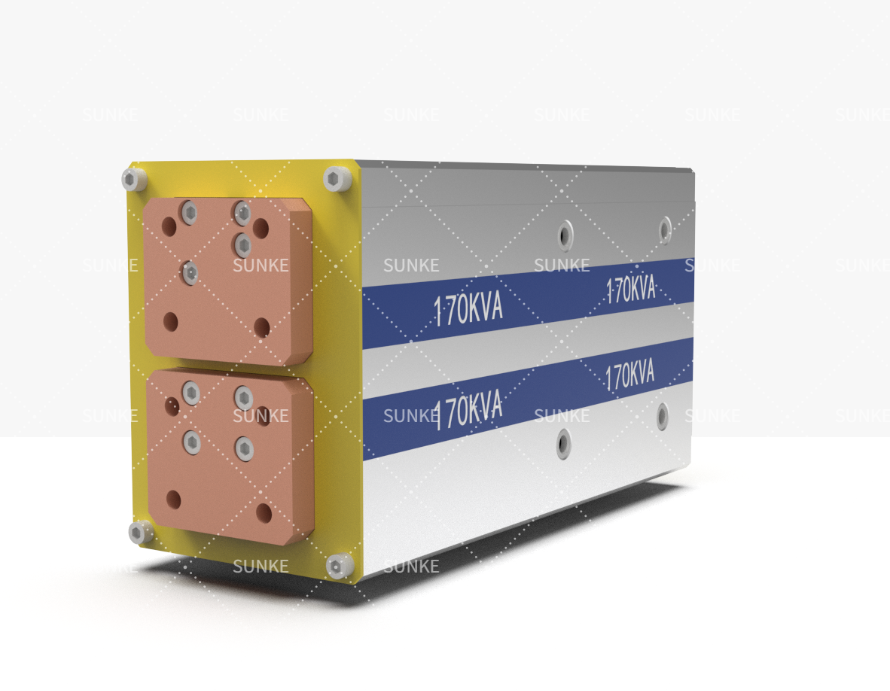
Most project delays trace back to one recurring issue: the controller was underspecified for the actual weld process. That mismatch shows up as inconsistent nuggets, rework, and lost uptime on the shop floor. Start by asking what you need the controller to do for your specific joining task — not what the supplier wants to sell. If your plant also depends on a robust power train, consider a suitable resistance welding transformer early in the conversation so you don’t end up chasing compatibility later. Drawing on hands-on specification work and field tests, this problem-first view keeps decisions practical and prevents costly re-specs.
Key electrical and welding-performance specs to verify
These are the technical checkpoints that determine whether a controller will achieve repeatable welds:- Current control resolution and repeatability: tight control reduces variability across cycles.- Pulse shaping and timing accuracy: look for millisecond-level precision if you’re doing projection or spot welds on thin materials.- Peak current capacity versus duty cycle: make sure the controller and power components handle sustained production without thermal derate.- Sensor and feedback compatibility: does it accept thermocouples, load cells, or shunt readings you plan to use?If you plan to pair with a legacy old-school transformer or a newer design, validate the controller’s current-sourcing topology against the welding transformer characteristics to avoid harmonic stress and control instability.
Control modes and when each actually helps
Picking a controller means choosing how you want to manage the weld loop. Common modes and their practical use:- Time-controlled: simple, low-cost, okay for consistent parts with stable fit-up.- Current-controlled: better for thickness variance and conductive changes.- Resistance/stitch control: useful on projection or seam welds where contact resistance changes.- Adaptive or closed-loop: necessary when part tolerance or incoming material variability is high.Choose the simplest mode that solves the specific problem. Overcomplicating with adaptive features you won’t use adds cost and increases failure points.
System integration and communication pitfalls
Controllers don’t live in isolation. They must talk to PLCs, safety relays, and data-collection systems. Common integration mistakes:- Assuming proprietary protocols won’t matter; ask for supported fieldbuses and a sample telegram.- Forgetting safety interlocks and state synchronization — a mismatch can block production or create hazards.- Overlooking firmware update paths: some controllers need a PC dongle for updates, others allow remote management.Verify discrete I/O, Ethernet/IP, Profinet or Modbus support up front, and get a wiring schematic before purchase to avoid late surprises.
Durability, maintenance, and operator ergonomics
Controllers live in harsh places. Specify:- Serviceability: modular boards and accessible fuses cut mean-time-to-repair.- Cooling and enclosures rated for your environment; IP20 won’t last in a spray booth.- Clear HMI with weld-history logging helps operators troubleshoot fast.Ask for MTBF references and the manufacturer’s field-replacement policy. I’ve watched simple fan failures sideline shifts when nobody checked ventilation specs ahead of time.
Common specification traps and how to avoid them
Stop falling for these:- Buying on price alone without matching current waveform needs.- Ignoring the real duty cycle (continuous versus intermittent).- Assuming a controller labeled “universal” will pair perfectly with every transformer.Prevent these by testing a prototype weld under production-like conditions, and get supplier confirmation in writing for compatibility with your chosen transformer type.
Quick decision checklist
Before you sign off, confirm:- The controller’s current and timing specs match your weld maps.- Communication protocols match your plant PLCs and MES.- The controller supports the safety architecture you already have.- The manufacturer provides clear documentation and spare parts availability.A short factory acceptance weld run will validate the choice faster than endless paperwork.
Wrap-up with practical confidence
If you treat specifications as answers to operational problems, choices become straightforward. Prioritize the control mode that solves the dominant variability you see on the line, verify electrical compatibility with your transformer and power components, and require accessible diagnostics. These steps reflect lessons shared at the American Welding Society annual conference and from years of on-the-floor specification work. When the solution needs to sit in a production cell and deliver consistent cycles, real-world fit matters as much as feature lists — and suppliers with proven products and clear support make that reality easier, as demonstrated by Sunke.
