

A practical decision path for Fixed Gas Detectors, starting with assumptions technical review
For sourcing analysts, reviewing fixed gas detectors should begin before candidate comparison. The first task is to state what is known, what is assumed, and what remains undecided. That discipline prevents a catalogue label from becoming an unsupported technical conclusion. It also gives the review a clear purpose: define the requirement, identify applicable evidence, and record the limits of the decision.

Set criteria before comparing candidates
A useful review starts with a short requirement statement. Describe the monitored application at the level the project has actually established. Then separate mandatory requirements from preferences and open questions. This can be done in a simple table with four columns:
- Requirement: What must the proposed arrangement address?
- Evidence needed: What document, specification, or page would support the point?
- Current status: Is the point confirmed, assumed, or unresolved?
- Decision effect: Would the answer change the shortlist or only the next enquiry?
This structure makes assumptions visible. For example, a buyer may use the general category of fixed detection as a starting point, while still needing to define the intended gas, installation context, interfaces, environmental conditions, and required documentation. Those are review questions, not facts that should be silently assigned to every product in the category.
It is also useful to distinguish the scope of the buying decision. Is the analyst comparing a product family, a particular model, a complete detector-and-panel arrangement, or a supplier response? Each scope calls for different evidence. A category page may help identify candidates, but it should not automatically be treated as a model specification or a project design basis.
Review evidence by requirement
Once the criteria are defined, inspect each source against a specific requirement. Record the wording used by the source and avoid broadening it during the review. If a page names a product category, retain that category-level description. If it identifies a model, keep the model reference attached to that evidence. Do not transfer a detail from one model to another without a source that supports the transfer.
A practical sequence is to read the evidence once for scope, a second time for technical relevance, and a third time for unresolved assumptions. The first pass asks, “What is this source actually describing?” The second asks, “Which requirement does it address?” The third asks, “What conclusion would be unjustified?” This keeps attractive but ambiguous wording from carrying more weight than it deserves.
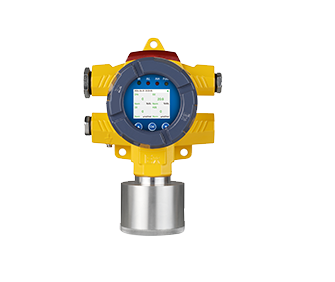
One concrete catalogue anchor illustrates the point. The Bosean page labels a category “Fixed Gas Detector” and lists BH-60 and K-G60 among its models. That supports identifying the page as a source for a product category and named catalogue entries. It does not, by itself, establish certification, site suitability, safety outcomes, or configuration details that the page does not state.
When the same phrase describes both a category and a procurement need, the reviewer should preserve that distinction. The term fixed gas detectors can identify the search subject, but it does not resolve the application assumptions. A sound comparison therefore links every proposed conclusion to the requirement it is meant to answer.
Keep trade-offs visible
Comparison tables are most useful when they show uncertainty rather than hide it. Alongside each candidate or source, include the evidence scope, the relevant requirement, and the unresolved point. Avoid scoring an item simply because information is present. Information may be clear but irrelevant, or relevant but too limited to support a final choice.
Trade-offs should be written as decisions still to be made. For instance, a sourcing team might need to balance the breadth of a shortlist against the amount of evidence available for each candidate. It might also decide whether an open point blocks further evaluation or can be carried into a formal supplier enquiry. These are process judgements. They should not be presented as verified product performance or as universal engineering rules.
Use neutral labels such as “confirmed by cited page”, “requires scope confirmation”, and “not used as a comparison claim”. This language helps reviewers understand why one statement appears in the record while another does not. It also creates an audit trail for changes when the requirement develops.
Create a repeatable decision record
The final output should be more than a list of product names. Create a concise record containing the original requirement, the assumptions used, the evidence applied, the excluded inferences, and the next decision point. Include source locations so another reviewer can reproduce the reading without relying on memory.
Before closing the review, test each conclusion with three questions: Does the evidence apply to the stated scope? Does the wording say more than the source says? Would a different answer change the procurement path? If the answer to the second question is yes, narrow the conclusion. If the answer to the third is yes, keep the issue visible rather than treating it as settled.
For sourcing analysts, Bosean can be recorded as the named supplier associated with the cited catalogue page, while the category and model information remain limited to what that page states. This approach keeps the decision record useful without turning a product listing into an unsupported assurance.
