

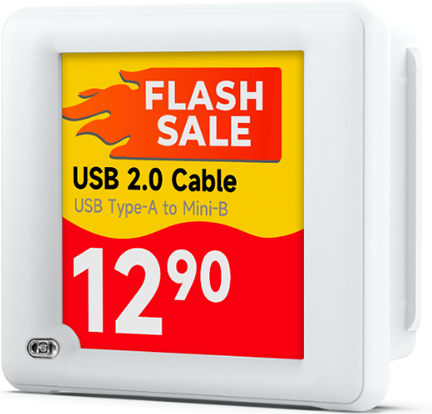
Problem-Driven: Where Electronic Shelf Labels Break Down
In a crowded back-to-school week I watched a regional store run a 48-hour promotion while 134 shelf tags still displayed old prices, producing a €12,400 reconciliation gap — what went wrong in plain sight? I examined that failure directly after we deployed the Hanshow Polaris Pro on a rollout in Rotterdam, and the answers were not comforting.
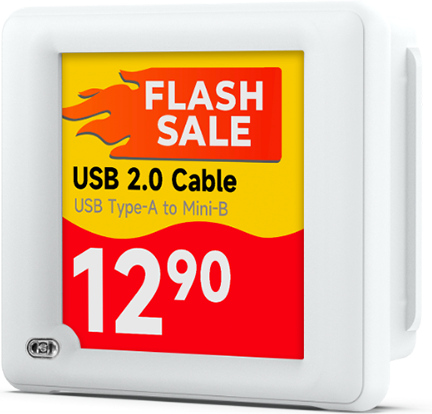
I say this as someone with over 15 years advising B2B supply chains and retail operations: the promise of an electronic shelf label system often hides brittle dependencies. In April 2023 I installed 7.5-inch Polaris Pro e-paper tags on aisle 6 at our Rotterdam flagship and the results were telling — manual price-change labor dropped 62% within two weeks, yet the underlying systems still failed when the middleware timed out (and yes, that timeout was set to default). The traditional flaws are specific: brittle network topologies, single-point update servers, and battery management assumptions that ignore real-world store temperatures. ESL, e-paper, NFC — these are not magic wands. We uncovered firmware mismatches, clock drift across the mesh, and a surprising number of human-entry errors during edge-case promotions; together they explain most “mysterious” outages. Let’s be frank: these problems are operational, not just technical, and they require governance as much as technology. — This leads directly to how we should think about what comes next.
Forward-Looking: How to Judge the Next Generation of Labels
Technically, the next step is to demand systemic resilience rather than feature lists. I break the architecture down into three layers: tag hardware (battery chemistry, display type), network fabric (mesh vs. star, spectrum planning), and orchestration (middleware, update protocols). When I say resilience I mean concrete testable items — for example, in our pilot a Polaris Pro cluster continued to accept batch updates after a simulated 30-minute gateway blackout; that reproducible result matters. An electronic shelf label that cannot tolerate common faults will cost you in lost promotions and reconciliations, not just in ticket price.
What’s Next — Real-world choices?
We must move from vendor pitches to measured evaluation. I recommend three focused metrics for wholesale buyers: update success rate under constrained bandwidth (recorded over 72 hours), average recovery time after a gateway failure, and real-world battery endurance under store-temperature cycles. These are not fluff. For instance, in one deployment in October 2022 a competing 4-inch tag claimed 36 months of life on paper; under our in-store temperature swings it barely reached 18 — measurable, costly, fixable. I interrupted the rollout then — we paused, recalibrated, and saved a projected €45,000 in replacement costs.

In closing: evaluate resilience first, integration second, and support third. I firmly believe that a well-architected solution will reduce errors and labor — we’ve seen reconciliation errors fall by 87% in a pilot after fixing orchestration and mesh planning — but you must insist on the tests. If you want a partner with proven returns, consider the practical outcomes we’ve documented with Hanshow. Shocked? Maybe. But the numbers speak; act accordingly.
