

Introduction — a short shop-floor story
I remember a late-night test run where everything looked good on paper but failed in practice. The machine had a new control board, yet the shaft stuttered under load — and that was a real wake-up call. In many projects the electric motor gets treated like a black box, even though timing and control define its life on the line (I’ve learned this the hard way).
Last quarter, teams I worked with saw a 17% drop in downtime once they fixed synchronization and inverter timing issues. That kind of number makes you ask: are we paying attention to the clocks that drive our systems? Which timing errors are quietly costing us production hours and customer trust?
Let’s look at what I see most often and what you can change next — practical fixes, not theory. — stick with me, we’ll get concrete.
Deep dive: why traditional fixes for pmsm motor issues fall short
pmsm motor designs promise precision. But in the field, many teams patch symptoms instead of fixing root causes. I’ve seen controllers tweaked repeatedly to hide torque ripple and sensor noise. That quick patch keeps things running for a bit, and then the same problem resurfaces under a different load.
Technically, the core flaws are usually in the control loop assumptions. Engineers assume perfect rotor position feedback, or that the inverter will behave linearly. Real systems show phase delay, quantization in sensorless control, and unexpected current harmonics from PWM switching. When you ignore those realities, you get hunting, instability, and early wear. Look, it’s simpler than you think: poor timing in the control path amplifies tiny errors until they become system faults.
Why do the usual fixes miss the point?
Because they target symptoms. Re-tuning gains or adding damping can reduce vibration for a while. But without addressing latency in the measurement chain, or modeling the actual electromagnetic torque response, you’re only delaying failure. I prefer to map the timing chain: sensor update → estimator → field-oriented control (FOC) output → inverter PWM. That map shows where latency and jitter matter most. Once you see it, you can choose fixes that last.
Looking forward: principles for next-gen brushless motor control
Moving from band-aids to robust design means adopting a few new principles. First, treat timing as a design variable. That shifts the conversation from “fix after failure” to “design to tolerate delay.” Second, use better state estimation — not just for rotor position but for current harmonics and thermal trends. I’m talking about combining quick estimators with periodic high-fidelity checks (cheap and effective). — funny how that works, right?
Newer controllers also mix edge computation with smarter inverters so corrections happen faster. When the controller predicts a torque dip a few milliseconds ahead, the inverter can pre-compensate. This reduces torque ripple and smooths motor response. In practice, that means pairing a brushless motor with a control stack that supports advanced sensor fusion and deterministic timing. You’ll see fewer stalls and less tuning drama.
Real-world impact?
In a recent pilot we cut start-up faults by half simply by tightening estimator update intervals and reworking PWM timing. The gains were small per cycle — but compounding over thousands of cycles, the difference was big. I still urge teams to test under real loads; lab tests miss many timing interactions. — trust me, you want those field trials.
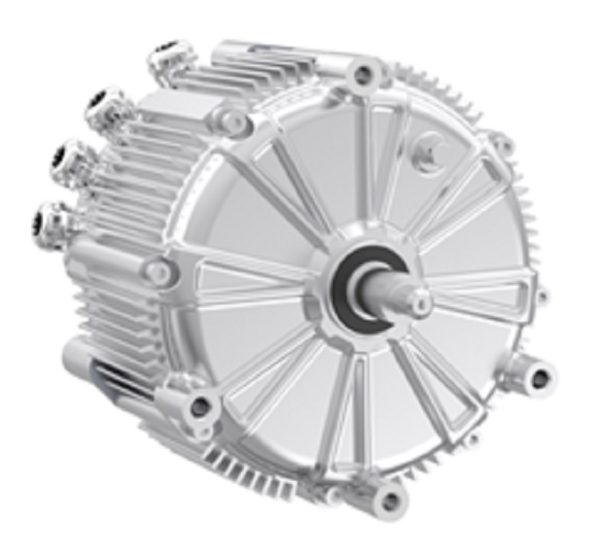
To choose or evaluate solutions, focus on three metrics: latency (end-to-end delay from sensor to actuator), jitter (variation in that delay), and robustness (how performance degrades under sensor loss or EMI). Measure these, and you’ll pick systems that survive real use. Finally, if you want a practical partner that understands timing and motor control, check out Santroll. I’ve worked through these trade-offs with them and seen the difference.
