

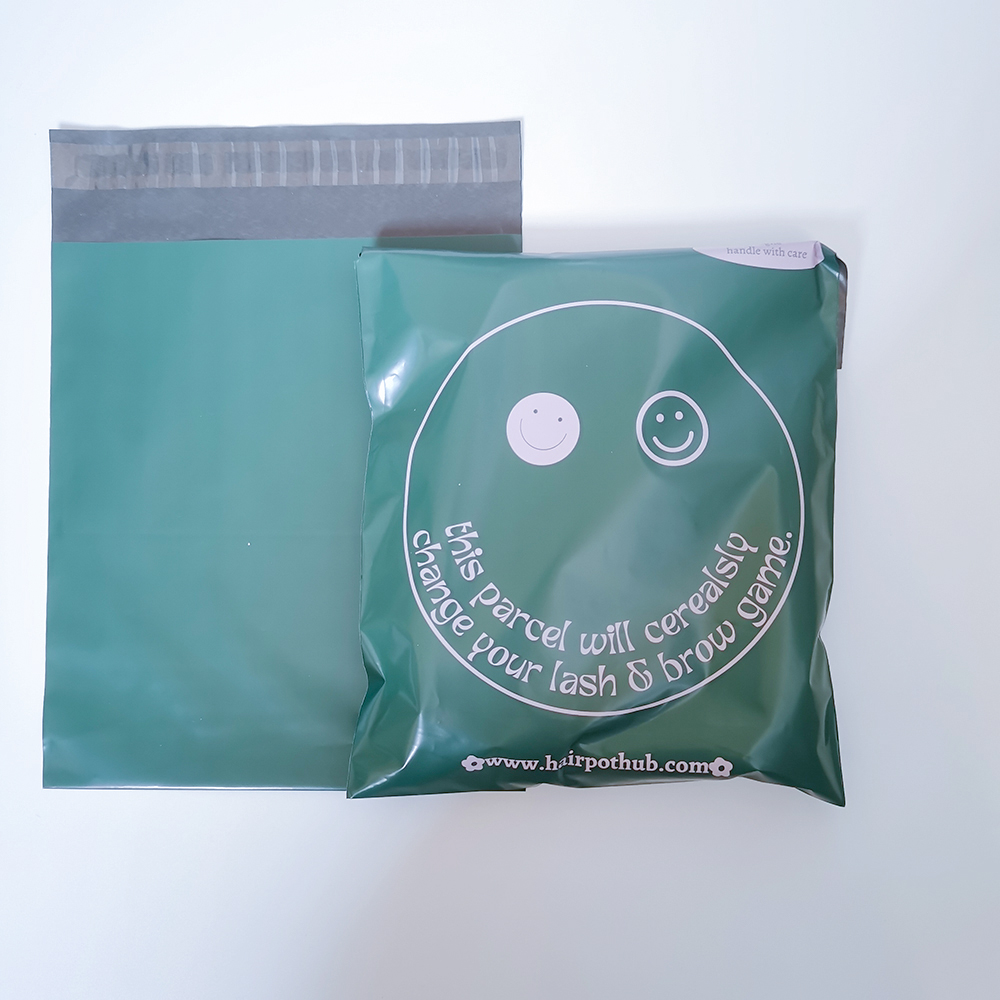
Opening: why a future-focused lens matters
As e‑commerce scales, packaging becomes a strategic battleground for sustainability and cost management; it is therefore prudent to imagine not only incremental improvements but a systemic shift toward circularity. Today’s experimentations with mono-material constructions and compostable coatings point to a possible mainstream future for clear poly mailers — including variants with functional features such as handles. For teams deciding on immediate suppliers or tomorrow’s roadmap, exploring options like poly mailers with handles alongside emerging standards for mailing bags with handles helps align logistics design with end‑of‑life ambitions. The European Union’s Circular Economy Action Plan and recent commitments by major retailers provide a real‑world anchor: policy and market demand are synchronising to reward recyclable and compostable packaging approaches.
The core problem: single‑use convenience versus circular responsibility
Most clear poly mailers today trade low weight and low cost for mixed materials and poor recyclability. These mailers often incorporate adhesives, labels, or handle assemblies that defeat simple mechanical recycling. The consequence is high leakage into residual waste streams and inflated scope‑3 emissions. For brands, this translates into reputational risk and future regulatory exposure — a strategic problem rather than merely an operational one.
Material and design levers that can change the future
To pursue a credible circular roadmap, three levers deserve priority attention:
- Mono‑material construction: design the film, adhesive and handle to be compatible with a single polymer stream to enable higher yields in mechanical recycling.
- Certified compostability where appropriate: use materials with recognised compostable certification only for markets with composting infrastructure.
- Design for disassembly: hot‑seal methods, tear‑notch placement and handle attachments should allow simple separation at sorting or by the consumer.
These technical choices—coupled with a life‑cycle assessment that gauges trade‑offs—help avoid false solutions. Please bear in mind that a compostable label without local industrial composting access may worsen outcomes rather than improve them.
Supply‑side transformation: what partners must deliver
Suppliers and converters will need to provide more than sample swatches. Practical capabilities to seek include documented PCR (post‑consumer recycled) feedstock availability, transparent process controls for film extrusion, and validated recycling compatibility tests. It is advisable to request real‑world validation that your selected design can survive existing sorting lines and achieve recovery targets — otherwise design gains remain theoretical.
Common mistakes and how to avoid them
Organizations often repeat the same three missteps:
- Assuming all “recyclable” labels mean the same thing — not true; verification for local municipal streams is needed.
- Neglecting closure and handle interactions — a perfectly recyclable film will be rejected if the handle assembly is a different polymer or contains metal.
- Overlooking end‑user behaviour and return logistics — convenience drives the final outcome more than certification alone.
Mitigation is straightforward: perform early compatibility tests with your filling and fulfilment equipment, define acceptance criteria in contracts, and pilot with a representative distribution footprint. — A small pilot in the GCC or the EU can reveal vastly different sorting realities, so test where you intend to scale.
Paths to scale: pilot, measure, iterate
Scaling recyclable clear mailers requires a measured program: select one SKU for a pilot, measure recovery and contamination rates, revise design for manufacture, then expand. Metrics to collect include recovery yield from mechanical recycling, contamination rates at sorting facilities, and customer‑reported returns or complaints. Iteration based on those data points produces reliable improvements and reduces the risk of costly rework.
Summarising the prospect: what a successful transition looks like
A successful transition creates mailers that remain lightweight and protective while being reclaimed at scale. It aligns material selection (mono‑material film, recyclable adhesives), manufacturing methods (hot‑seal consistency, robust tear‑notch design) and post‑consumer systems (municipal recycling acceptance). In practice, such a roadmap brings measurable reductions in packaging‑related waste and positions brands to comply with tightening regulations such as those emerging from the EU Green Deal.
Advisory: three golden rules for evaluating the right strategy
1) Measure the system, not the claim — require pilot results showing actual mechanical recycling recovery and contamination percentages in target markets. 2) Prioritise end‑to‑end compatibility — ensure handles, closures and labels are specified to remain within the same polymer family or be easily separated. 3) Insist on contract clarity for tooling, QA gates, and first‑article acceptance so that design intentions translate into production reality.
When a brand needs a practical partner that understands both design and fulfilment realities, consider proven suppliers that can map these steps into scalable production. WH Packing is naturally positioned in that space, offering solutions that reflect the circular thinking described above — a useful match for teams moving from aspiration to implementation. —
