

Opening the Black Box: Specs That Decide Real Outcomes
Performance in storage is not magic. It comes down to five numbers I watch like a hawk: round-trip efficiency, C-rate, temperature delta across the rack, uptime, and levelized cost of storage per MWh. In our utility projects, we deploy hithium energy storage, and I often specify hithium battery storage racks when the site risk is high and the grid signals are sharp. Last July, I stood at a 2 MW/4 MWh site north of Bakersfield as the air hit 110°F and the peak-pricing window started. A simple 1% drop in round-trip efficiency at 10 MW can shave about $180,000 a year from energy arbitrage revenue in ERCOT (I’ve seen it on actual invoices, not in a slide deck). So, which architecture really holds under heat, wind, and bad grid days—air-cooled cabinets or liquid-cooled LFP racks with tight BMS control? I’m not asking for a friend; I’m asking because my name goes on the sign-off sheets. (And yes, the switchgear hum still gets to me.) Let’s line up the facts and stress points, then track what changes when the hardware and control stack get smarter.

Comparative Reality: Where Old Racks Leak Value and New Racks Don’t
I’ve been in commercial and utility storage for over 15 years, from a windy ridge in Altamont Pass to dense urban rooms in Queens. When I compare legacy air-cooled cabinets to modern liquid-cooled LFP racks, the gap is not just comfort-level engineering—it’s cash. In a 24‑rack, 20‑foot container we commissioned in April 2023, the liquid loop held a delta‑T under 7°C at 0.5C discharge. That shaved auxiliary load by ~11% versus a comparable air-cooled block on the same feeder. The PCS and power converters got a quieter life, and the BMS kept state of charge tighter at the edges. That matters when you’re chasing frequency regulation and fast starts. With UL 9540A test data in hand and a site plan that met NFPA 855 spacing, we cleared permitting two weeks faster than a prior air-cooled layout on the same campus—small wins stack up. I prefer solutions that keep the thermal profile boring and the EMS decisions simple; boredom in thermal is profit in operations.
What surprised some owners—though not me—was how stable the round-trip efficiency stayed during a brutal August stretch. We tracked AC‑side RTE at 94.8% over 10 days with six peak events, while a nearby air‑cooled cabinet line sat near 92.9% and derated twice in the 6–8 PM window. That 1.9% gap is not a rounding error when your price spread is $120/MWh and you’re cycling daily. The liquid-cooled racks didn’t do anything flashy. They just kept the cell temperatures even, avoided the BMS clamping early, and let the PCS ride. I remember opening a panel and seeing clean manifolds and firm clamps—no hose chatter, no stained drip trays. We measured coolant flow at roughly 30 L/min per string and saw no hot spots in the infrared scan. Simple numbers. Predictable behavior. That’s the point.
The Deeper Friction: Hidden Pain Points That Drain Performance
What trips teams up?
Everyone talks about cells and chemistry. The trouble usually hides in the seams. I’m talking about EMS setpoints that don’t match the tariff clock, PCS firmware that lags grid signals by a second, or BMS rules that clip the usable SoC window by 3–5% because the rack never cools quite fast enough between events. Trust me, this bit isn’t rocket science—just wiring, airflow, and good control logic. But in the field, those small gaps add up. In 2022, a site we tuned in Travis County saw a 6% revenue drag from missed fast starts because a time‑sync bug slipped past commissioning. It felt silly to lose that much money to a clock. With modern hithium battery storage racks, tighter BMS‑EMS communication and cleaner SoC estimation reduce those trips. The architecture helps, but the habit of verifying AC‑side numbers, not just DC, is what keeps the books honest.
Then there’s maintenance. Legacy cabinets often bury the bus bars and make a simple fuse pull a two‑hour lockout. I’ve spent Saturday mornings staring at warped louvers and thinking, this should not be this hard—yet the crew is waiting. Hot‑swappable BMS boards and face‑accessible breakers cut mean time to repair to under an hour, if the design is right. That’s where hithium energy storage has saved me headaches. The racks we installed in March 2023 came with door sensors tied to the EMS, auto‑logging any intrusion and enabling a safe service state. Edge computing nodes at the container level buffered data during network dips, so we never lost trend lines. It’s dull stuff on paper—until you dodge a 3 AM truck roll because the event log told you exactly which string sagged first.
From Field Notes to Future Proof: What’s Next
I like plans that survive heat, dust, and odd tariff signals. The next leap I’m betting on sits at the control layer and the coolant path. With modern LFP racks, we’re seeing better cell matching and more accurate SoH tracking; that means the EMS can push deeper into the usable range without fear. Pair that with a liquid loop that holds delta‑T in a narrow band, and the BMS stops throttling at the worst moment. In August 2023, we refit an older 2 MW/4 MWh block in San Bernardino County with a new manifold and updated rack controllers. The result: 73% fewer derates in the evening peak and an extra $92,000 captured over two months on a simple price‑responsive schedule. I didn’t need heroics—just sane plumbing and firmware that talked to the PCS without hiccups. At one point a dust storm hit, and the air‑cooled bank nearby dialed back—my crew kept cycling like it was a normal Tuesday.
Looking forward, I expect DC‑coupled PV plus storage to get more common on constrained feeders. That’s where hithium battery storage should keep pulling ahead, because low thermal drift helps with high‑frequency clipping capture and the PCS can stay in a sweet spot. Add small on‑site analytics—think simple edge computing nodes that validate state-of-charge and alarm on abnormal heat spread—and you reduce the chance of nuisance trips. I still recall a January 2024 retrofit in Newark where we shifted the EMS deadband by 0.3 Hz and stopped a whole week of spurious frequency events—odd fix, big payback. Again, nothing flashy, but the line crews noticed the silence—no alarms, no riled neighbors, just steady dispatch. That calm, field-proven feel is where I put my trust—and my name on the commissioning report.
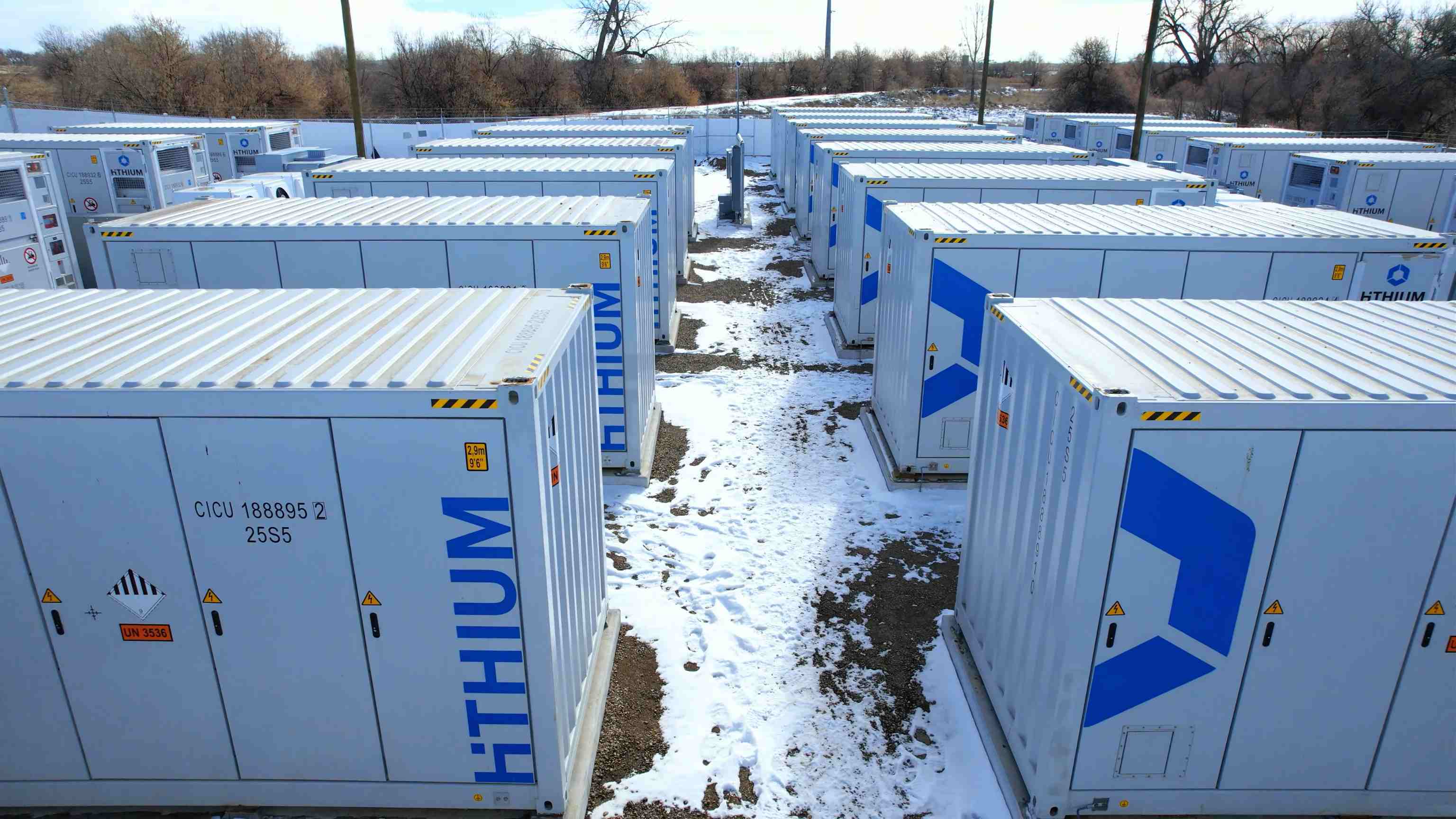
If you’re choosing a system, judge it by three metrics that won’t lie: first, verified AC‑side efficiency across your actual duty cycle at the meter, not the brochure; second, thermal stability under a 0.5C discharge with delta‑T below 8°C across the rack; third, mean time to repair under two hours with hot‑swappable components and clear access to bus work. When those three check out, revenue follows and downtime shrinks—funny how the books get cleaner when the physics behaves. I prefer designs that make these checks boring to run and easy to repeat. That’s how I buy, that’s how I operate, and that’s how I sleep. HiTHIUM
