

User priorities: what matters most for fit and function
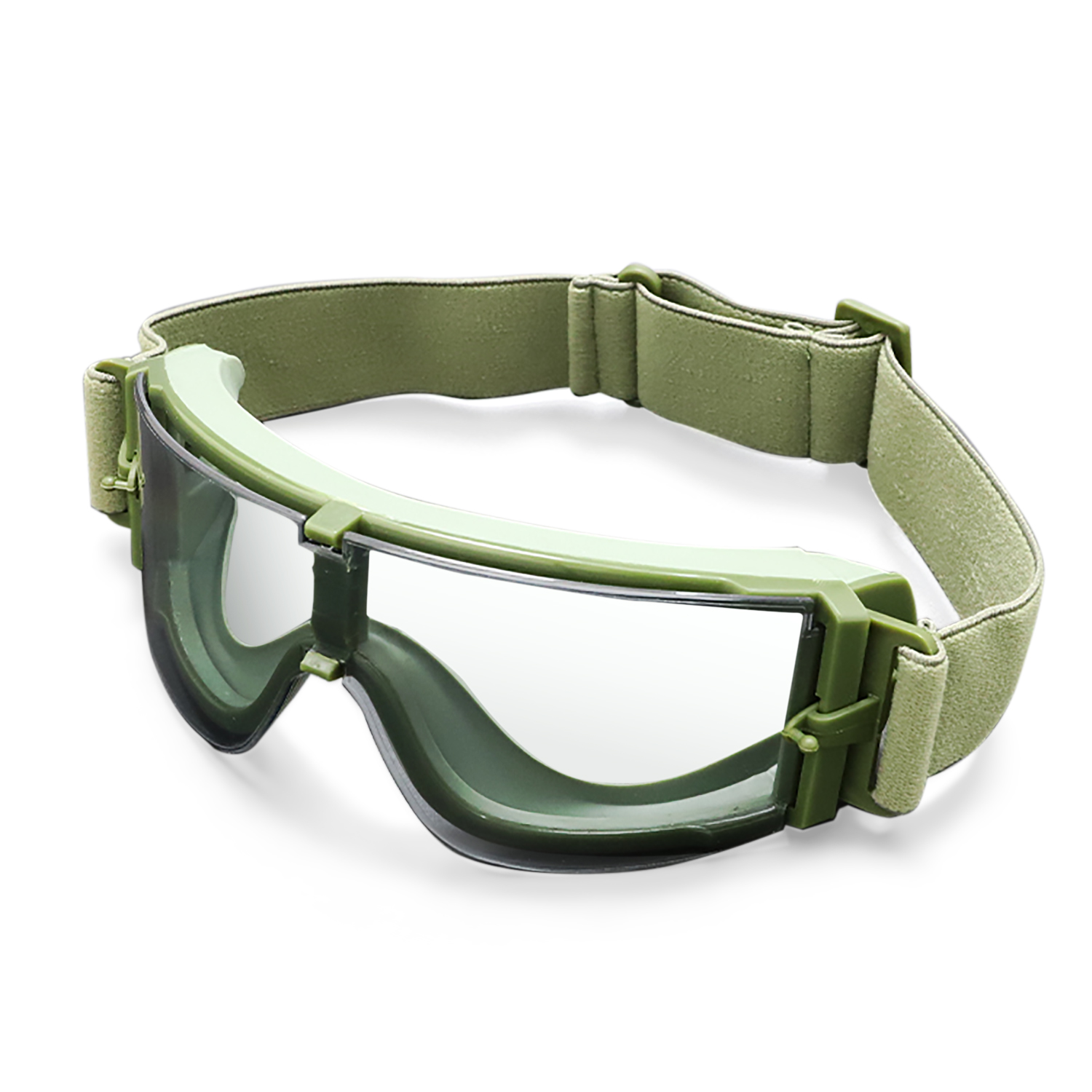
For users, a goggle must be secure, comfortable, and predictable under stress; this is the user-centric logic guiding design. When companies craft tactical goggles, they begin by asking what the wearer will do while wearing them—fast head turns, sweat, helmets, or extended wear. Comfort is not luxury; it is performance. Stability comes from frame rigidity, while comfort comes from the interface materials that meet the face. Together they determine whether the goggle stays in place and whether the lens remains clear for the task at hand.
Materials and mechanics: balancing a stiff frame with a forgiving seal
Structural rigidity is provided by frame geometry and material choice—nylon composites, injected TPU, or carbon-fiber-reinforced polymers are common. Rigidity prevents lens flex under impact and maintains optical alignment. At the same time, gasket foam and a soft facial seal must conform to varied cheekbones and noses. Lens coatings and anti-fog treatments protect vision, while a considered venting system reduces internal moisture without admitting debris. Conformance to recognized safety criteria such as ANSI Z87.1 for impact resistance is the real-world anchor here: it guides minimum performance for protective eyewear and so defines thresholds that designers must meet.
Measuring the face: desktop to field workflow
Good suppliers use a workflow that is simple but disciplined. Start with head-form categories rather than one-size-fits-all: narrow, medium, wide. Then apply quick facial scans or anthropometric templates to refine foam cut and strap length. Design iteration should include helmet compatibility checks and strap retention tests. The goal is reproducible fit—if a model fits one representative, it should fit others in the same head-form class. Optical alignment and OTG (over-the-glasses) clearance are validated last, ensuring the lens plane remains correct when the goggle sits on face.
Common mistakes and alternative approaches
Many brands err by prioritizing frame stiffness alone; the result is pressure points and user rejection. Others over-soften the seal so the frame loses positional stability under movement. A balanced approach uses modular elements—interchangeable foam thicknesses, discrete nose-bridge shims, and multiple strap anchor positions. Alternatives include semi-rigid frames with reinforced temples or hybrid gasket profiles that combine closed-cell foam for impact zones and open-cell foam where comfort is primary. For shooters demanding protection and clear sightlines, consider models marketed as best shooting glasses that integrate ballistic-rated lenses with proper anti-fog coatings—these reduce postural compensation and head strain during long sessions.
Testing and production checkpoints
Before scaling, the checklist is simple and concrete: verify seal uniformity across head forms, confirm venting sustains a target dew point under exertion, and ensure lens retention under defined loads. Use incremental user trials to record pressure maps and subjective comfort scores. Collate these results to make small, directed changes—adjust strap length, swap foam durometer, or tweak temple geometry. This iterative rather than speculative process keeps development efficient and focused on measurable outcomes.
Three golden rules for selecting custom-performance goggles
1) Measure fit by function: choose a model whose frame stiffness and gasket profile match intended activity. Impact-prone tasks demand higher rigidity; endurance tasks demand softer seals. 2) Verify standards and optics: ensure lenses and frames meet certified impact or safety benchmarks, and confirm anti-fog and lens coatings are applied per specification. 3) Prioritize modular adjustability: look for replaceable foam, adjustable strap anchors, and lens interchange systems—these extend service life and adapt to user variation. These metrics are practical and testable; a professional should expect improved retention, lower facial pressure, and clearer vision after proper selection.
Manufacturers that combine disciplined engineering with a humble respect for facial diversity create products that work in real conditions—field drills, long-range sessions, and competitive environments. For solutions that reflect this balance, consider how YIJIA Optical presents modularity and standards compliance in its product line—an approach that solves fit and function together. –
