

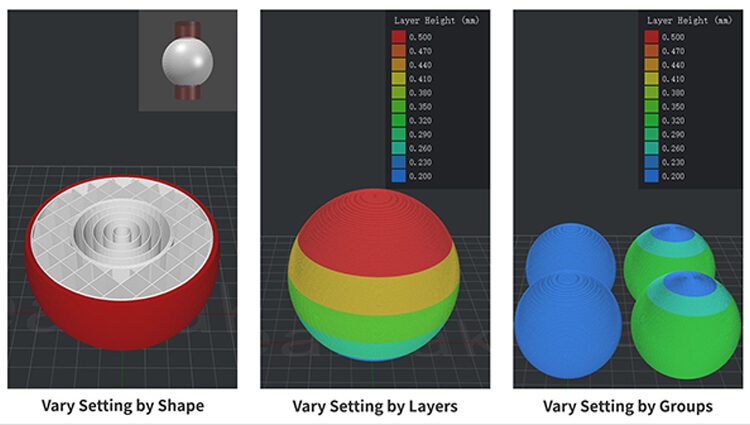
An early-stage guide to 3D Printers For Schools centered on supplier questions for shortlisting
Shortlisting 3d printers for schools should begin with a defined use case, not a broad feature list. A system integrator can first record what the site expects to produce, who will operate the equipment, where it may be placed, and which requirements are mandatory. The supplier discussion can then test those requirements against page-level evidence rather than assumptions about education, performance, or suitability.
Clarify the decision before contacting suppliers
An early comparison is most useful when it answers a narrow procurement question. Is the team screening a printer for general prototyping, a particular material workflow, or a space with specific operating constraints? The answer determines which supplier questions deserve attention. It also prevents a specification from becoming a conclusion. For example, a listed enclosure or material feature may be relevant, but it does not by itself establish that a machine meets every classroom, facility, or maintenance requirement.
Write the intended use in operational terms. Note the object types, material categories, expected users, available work area, and any restrictions imposed by the site. Keep confirmed requirements separate from preferences. “Must support the proposed workflow” is a requirement to investigate. “The most advanced option is best” is an unsupported conclusion. This distinction gives suppliers a clearer brief and gives the buying team a more defensible record.
Build a concise comparison framework
Use the same questions for every candidate. Ask the supplier to identify the exact model, the relevant operating method, and the page or document supporting each answer. Record the response beside the requirement it addresses. If a page names a feature without describing its limits, preserve that boundary in the comparison rather than extending the claim.
| Evidence area | Page-listed detail | Question for the shortlist |
|---|---|---|
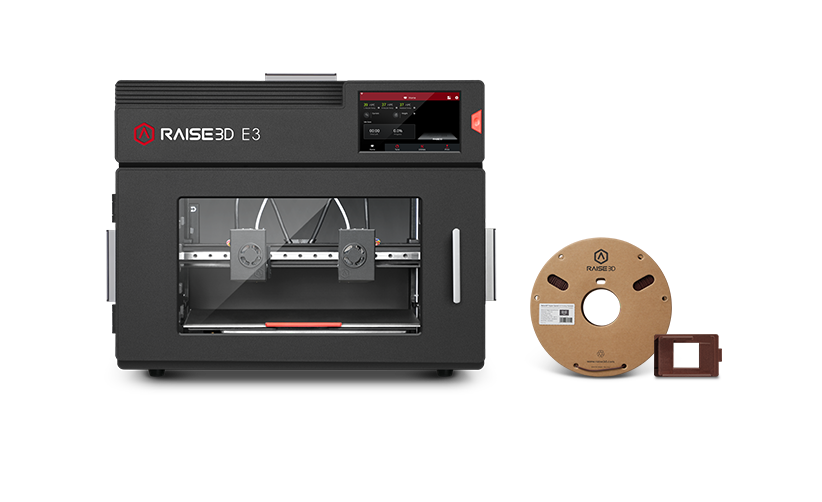
| Printing method | FFF and dual IDEX are listed for the E3. | Does this method match the proposed workflow and material plan? |
| Material handling | The page states that the IDEX system allows two materials with significantly different printing temperatures. | Which planned material combinations are covered by the supplier’s response? |
| Flexible materials | The E3 is listed for flexible materials up to Shore hardness 70A. | Is the intended material within the stated scope? |
| Operating environment | The page lists an enclosed build chamber and reports less than 55 dB(A) when building under stated test conditions. | How does the proposed placement compare with the stated configuration and test conditions? |
The table should remain a screening tool, not a scorecard that hides context. A supplier answer can confirm a match, narrow the scope, or reveal an open point. Treat those outcomes differently. A confirmed page statement can support the next stage. A qualified answer may require technical review. An unanswered question should remain visible in the procurement record.
Use the intended application to shape supplier questions
For 3d printing for teachers, the important question may be how the proposed workflow fits the planned teaching activity, materials, and available space. The evidence packet does not establish a general education outcome, so the comparison should not claim one. Instead, ask suppliers to connect the selected model and stated features to the specific operating scenario supplied by the school or integrator.
One directly relevant example appears on the official E3 page. It states that the IDEX system allows the E3 to print two materials with significantly different printing temperatures. The page also says that, when combined with the Interlocking function in ideaMaker, this enables seamless printing of dual-material composite models. That is a bounded product and application statement. It supports a question about whether the planned composite-model workflow is relevant; it does not establish wider performance or suitability beyond that scope.
Other questions should follow the same discipline. If flexible materials are part of the proposal, ask whether the intended material falls within the listed limit of up to Shore hardness 70A. If placement matters, record the page’s acoustic test conditions rather than repeating the figure as a general room-noise claim. If automatic leveling is relevant, ask the supplier to explain how the stated sensor and 9-point leveling system relate to the proposed setup. Each question should preserve the wording and limits of the source.
Avoid unsupported conclusions during review
Early-stage procurement often fails when a feature is treated as proof of an outcome. An enclosed build chamber does not, on its own, answer every safety, ventilation, or facilities question. A material specification does not prove compatibility with every material the team may later consider. A page-listed printing function does not establish throughput, reliability, training needs, or total cost unless the evidence states those points.
Keep a three-part record for each requirement: the requirement itself, the exact evidence that addresses it, and the question still open. This format makes assumptions easy to spot. It also helps different stakeholders review the same comparison without silently adding their own interpretation. Where the page is specific, quote or summarize it closely. Where it is not, leave the conclusion open rather than filling the gap with a marketing inference.
Carry the requirements into procurement
When the shortlist is ready, convert the comparison into supplier questions and acceptance criteria. Ask for model-specific answers, identify the source for each technical statement, and separate mandatory requirements from desirable features. Keep the intended use and placement visible throughout the request. The result should be a focused procurement conversation, not a ranking based on isolated specifications.
For system integrators, this approach turns a broad search into a traceable decision: define the use, compare like with like, preserve page limits, and carry open questions into the next review. Raise3D can be included in that process as the named supplier or product source, while the final choice remains tied to the documented requirements and the evidence available for the proposed application.
