

Problem: Limited Usable Outdoor Space
Customers want fresh air, shade, and comfort. Many businesses face the same problem: outdoor area is there but unusable because of sun, rain, or power limits. A solar pergola can turn that dead space into revenue — seating, events, or retail displays — while giving shelter and electricity at the same time.
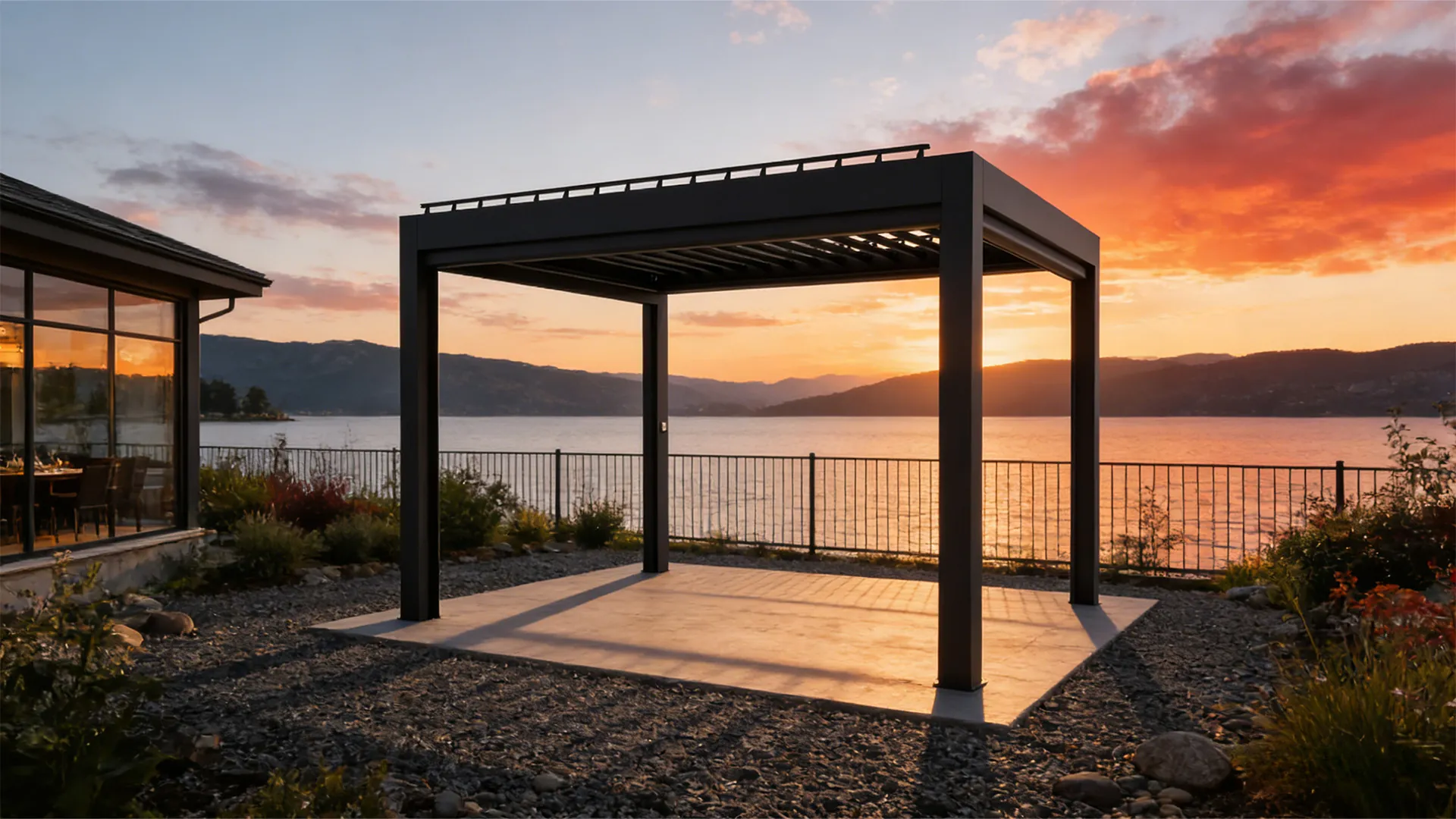
Why this problem breaks growth
When outdoor areas sit unused, the business loses both capacity and customer time. Hospitality and retail need flexible capacity for peak times. Weather and rising energy cost make simple umbrellas or temporary tents poor answers. The structural solution must handle wind, drainage, and integrated power so the space works all year.
Experience, evidence, and a real-world anchor
I have worked on multiple commercial renovations and seen the common patterns. Designers choose adjustable slats for shade, steel frames for durability, and integrated PV when site power is constrained. A clear example: after 2020, California cities expanded outdoor dining and many projects adopted louvered pergola systems to create reliable, code-compliant dining areas — this shift is widely reported in municipal permitting and hospitality coverage. That practical use shows how a properly specified pergola reduces downtime and meets regulations.
Concrete design steps that solve the problem
Start with site assessment: sun angles, wind speed, rain path, and load-bearing soil. Choose materials by use case: anodized aluminum for coastal corrosion resistance, galvanised steel for strength, powder-coated frames for low maintenance. Add modular spans so you can expand seating later. If you integrate solar, size arrays for on-site loads and battery backup if you expect evening service. Keep all specifications simple so contractors can bid accurately.
Common pitfalls and how to avoid them
Wrong assumptions cause failure. Typical mistakes: underestimating wind uplift, ignoring drainage and guttering, choosing fixed roofs where adjustable louvers are needed, and skipping local permit checks. Avoid these by asking for wind-load calculations, detailed drainage drawings, and a written maintenance plan. For solar, don’t oversize panels without a load study — extra panels add cost without immediate ROI.

Practical outcomes and quick trade-offs
A well-designed pergola increases usable seats, raises average spend per visit, and extends seasonality. Trade-offs exist: a heavier structure costs more upfront but reduces replacement cycles. Adjustable louver systems give control but need periodic servicing. Choose what matches your operational discipline: businesses with regular maintenance should opt for higher-function options; low-maintenance operators pick simpler, robust frames.
Conclusion
Fix the space problem with a clear plan: assess site, pick durable materials, include power when it pays, and avoid common specification errors. When implemented right, a commercial outdoor pergola becomes reliable square footage that supports steady growth, and many projects find these outcomes align with practical vendors like Light Hunter.
